


When autumn arrives in the UK, questions about vitamin D tend to come up again: which foods contain it, how much do adults need, and does every supplement provide the same amount? The useful answer starts with public-health guidance and the label in front of you—not with the idea that a higher dose must be better.
This guide explains the main food sources of vitamin D, why winter changes the picture, and how to compare micrograms (µg) with international units (IU). It is general information, not individual medical advice.
Vitamin D in brief
- Food sources: oily fish, egg yolks and some fortified foods are useful sources. The amount varies by food and product.
- UK winter guidance: the NHS advises adults to consider a daily supplement containing 10 µg (400 IU) during autumn and winter.
- Food alone can be difficult: vitamin D occurs naturally in relatively few foods, so it can be challenging to obtain the recommended amount from diet alone.
- Check the dose: 1 µg of vitamin D equals 40 IU. A supplement providing 100 µg contains 4,000 IU—not 400 IU.
Which foods contain vitamin D?
Vitamin D is found naturally in a relatively small range of foods. A varied diet can contribute to intake, although the amount in a portion can differ considerably.
| Food | What to know |
|---|---|
| Oily fish | Salmon, sardines, mackerel and herring are among the recognised food sources of vitamin D. |
| Egg yolks | Egg yolks contain vitamin D, though the amount is not the same in every egg. |
| Fortified foods | Some breakfast cereals and fat spreads have vitamin D added. Fortification varies, so check the nutrition label. |
| Other foods | Some meat and offal can contribute vitamin D, but food amounts vary and these are not a dependable way to calculate your daily intake without nutrition information. |
For a UK overview of food sources and bone-health nutrition, see the NHS guide to food for healthy bones.
If you eat a plant-based diet, check whether the foods and drinks you buy are fortified rather than assuming they contain vitamin D. Fortification is not universal, and a product's packaging is the best place to confirm what it provides.
Can you get enough vitamin D from food alone?
Food can help, but the NHS notes that it is difficult to get all the vitamin D we need from diet alone. Unlike nutrients that occur in a wide variety of everyday foods, vitamin D is naturally present in a fairly limited selection.
That does not mean food is unimportant or that everyone needs a high-strength supplement. A balanced diet remains the foundation of good nutrition; supplementation advice is about helping people meet a specific nutrient recommendation when sunlight and food may not provide enough.
Why does vitamin D guidance change in autumn and winter?
Your skin can make vitamin D when it is exposed to suitable sunlight. In the UK, from around late March or early April to the end of September, most people can make the vitamin D they need from sunlight on their skin. Between October and early March, sunlight is generally not strong enough for this process to provide enough vitamin D.
For this reason, UK public-health guidance advises most adults and children aged five and over to consider a daily supplement containing 10 µg (400 IU) during autumn and winter. Children aged one to four should have a daily supplement containing 10 µg throughout the year, and babies have separate guidance based on age and infant-formula intake. Some adults are advised to consider a supplement throughout the year, including people who rarely get outdoors, people whose skin is usually covered when outside, and people with darker skin. Parents and carers should follow NHS advice for a child's age group.
Read the government's vitamin D guidance for further information about groups who may need year-round supplementation.
How much vitamin D do adults need?
The NHS states that adults need 10 µg (400 IU) of vitamin D a day and advises everyone to consider a daily supplement during autumn and winter. That is a public-health recommendation; it is not a personal prescription for treating a diagnosed deficiency.
Some people may be advised by a healthcare professional to use a different dose for a particular reason. If you have been prescribed vitamin D, follow the instructions from your prescriber rather than changing the dose based on a general online article.
Micrograms (µg) vs IU: how to read a vitamin D label
Vitamin D labels may show the amount in micrograms (µg), international units (IU), or both. They measure the same vitamin using different units.
- 10 µg = 400 IU
- 25 µg = 1,000 IU
- 100 µg = 4,000 IU
Always compare the amount per recommended daily serving—not just the large number on the front of the pack. Check how many capsules or drops make up one serving, whether other supplements you use also contain vitamin D, and the product's warnings.
The NHS advises adults not to take more than 100 µg (4,000 IU) of vitamin D per day unless a doctor recommends it. More is not automatically better, and combining products can make it easier to take more than intended. If you are unsure about the amount that is suitable for you, ask a pharmacist or GP.
What do vitamins D3 and K2 contribute to?
Vitamin D contributes to the normal absorption and utilisation of calcium and phosphorus, the maintenance of normal bones and teeth, normal muscle function and the normal function of the immune system. Vitamin K contributes to the maintenance of normal bones and normal blood clotting. These are nutrient-function claims; they do not mean a supplement treats or prevents a medical condition.
Some supplements combine vitamins D3 and K2 for convenience, but that does not mean everyone needs to take them together. Our separate guide explains what to know about vitamin D3 and K2 together, without assuming a combination is right for every person.
How to choose a vitamin D supplement thoughtfully
Before buying, check these details:
- Amount per serving: confirm µg and IU and follow the stated daily serving.
- Other sources: check multivitamins, cod liver oil and other supplements so you do not accidentally double up.
- Source and ingredients: check the source of vitamin D and whether the full ingredient list fits your dietary needs.
- Clear directions and warnings: choose a product that states how to use it and when to seek advice.
- Realistic claims: be wary of promises to prevent or treat illnesses or claims that a high dose is necessary for everyone.
Vitamin D is fat-soluble, and supplements come in different formats. Our article on vitamin D and supplement formats explains what that means and why an oil-based format should not be treated as a guarantee of better results for every person.
A transparent note about Max Thrives Vitamin D3 + K2
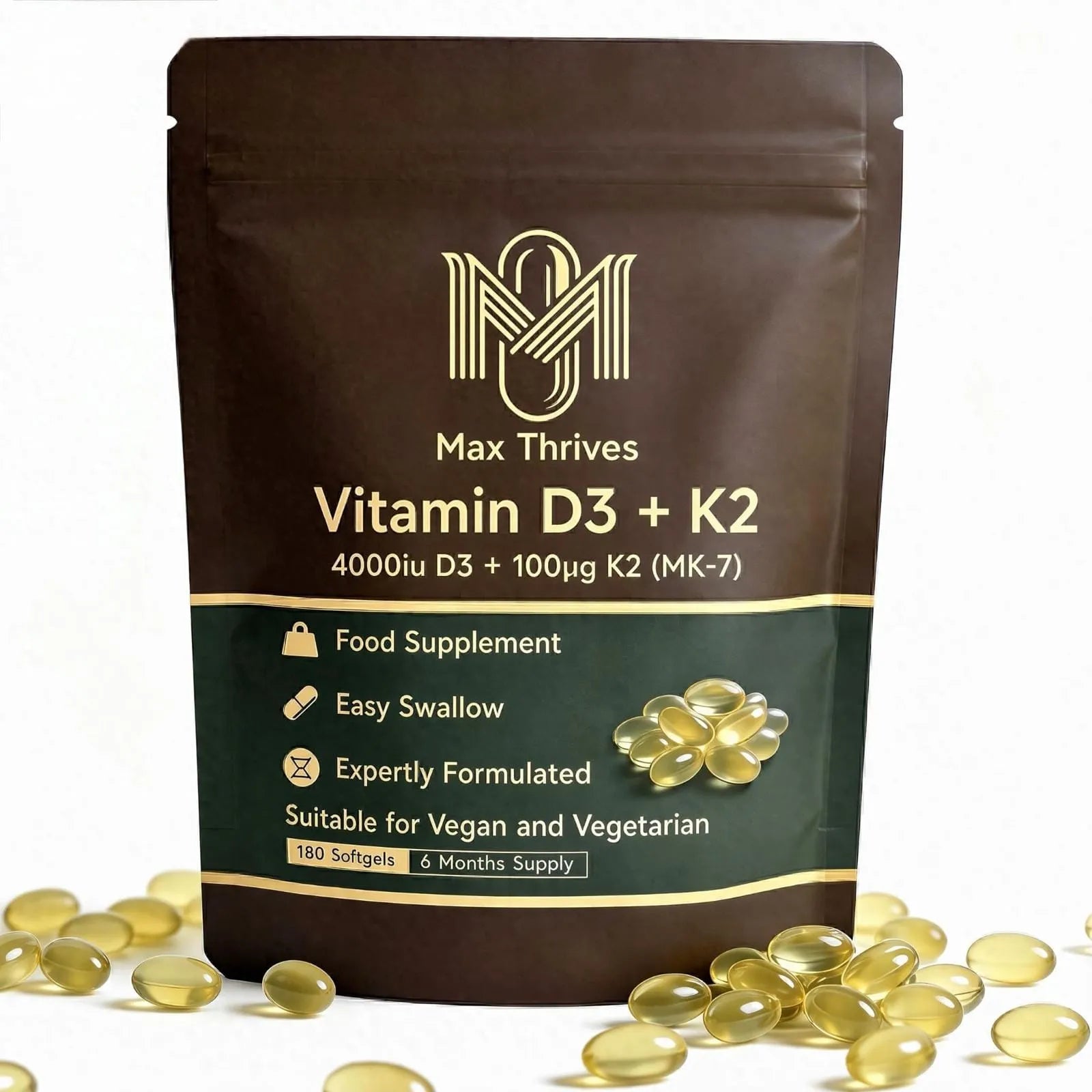
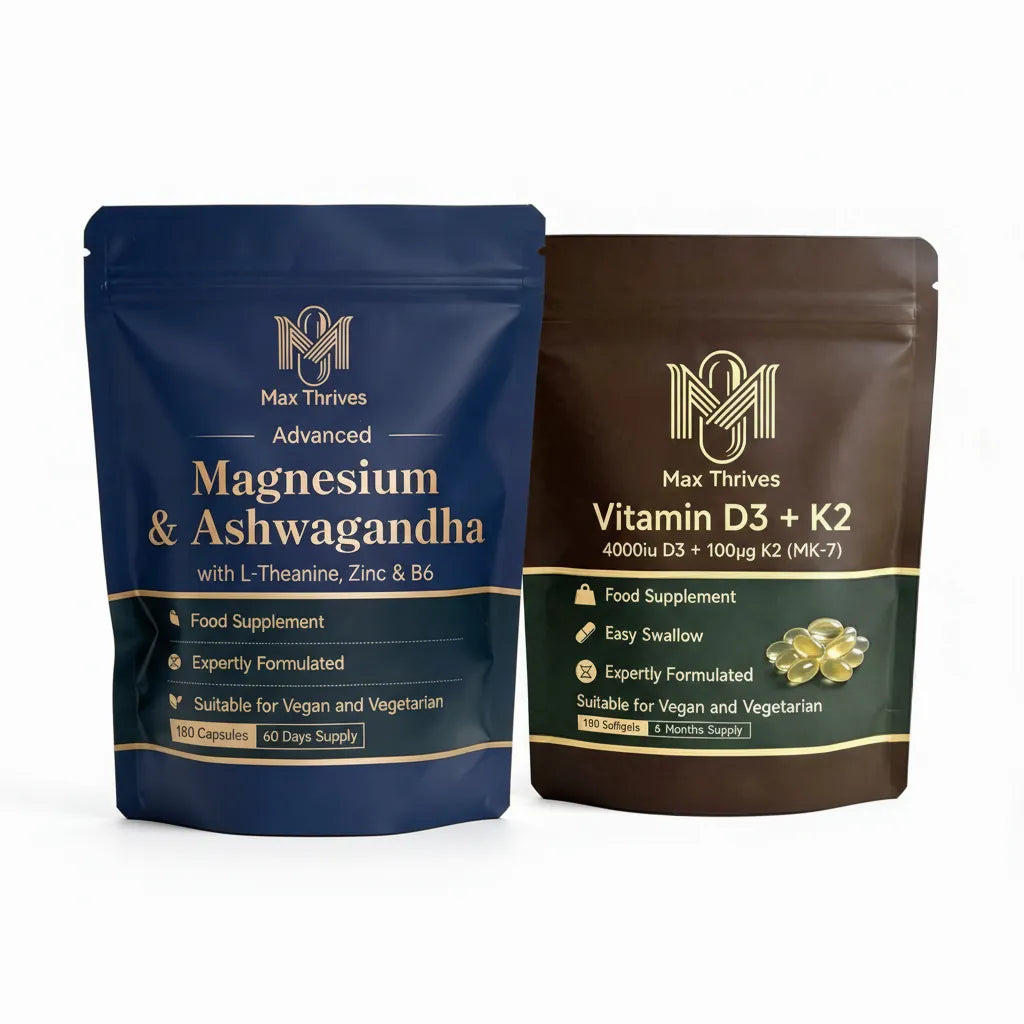
Max Thrives Vegan Vitamin D3 + K2 softgels contain 100 µg (4,000 IU) of vitamin D3 from lichen and 100 µg of vitamin K2 as MK-7 per softgel, in an olive-oil base. That is a high-strength amount: one softgel contains ten times the standard 10 µg UK public-health recommendation for autumn and winter. It should not be read as a recommendation that everyone needs this dose.
Because one softgel provides 100 µg of vitamin D3, do not combine it with other vitamin D supplements without checking with a qualified healthcare professional. If you take warfarin or another vitamin K antagonist, ask your prescriber before using a vitamin K-containing supplement. Speak with a pharmacist or clinician before use if you take medicines, have a medical condition, are pregnant or breastfeeding, or are unsure whether a high-strength formula is suitable.
If you are comparing products, you can review the full ingredients, directions and warnings on the Max Thrives Vegan Vitamin D3 + K2 product page. Read the label carefully before use.
Frequently asked questions
What are the best food sources of vitamin D in the UK?
Oily fish, egg yolks and some fortified foods such as certain breakfast cereals and fat spreads are recognised sources. Check food labels because vitamin D content and fortification vary.
Is 10 µg the same as 400 IU?
Yes. For vitamin D, 10 µg equals 400 IU.
Should everyone take 100 µg of vitamin D in winter?
No. The standard UK public-health advice for most adults is to consider 10 µg (400 IU) daily during autumn and winter. A 100 µg supplement is high strength and should not be treated as the default choice for everyone.
Do I need to take vitamin K2 with vitamin D?
Not everyone needs a combined supplement. Consider your diet, medicines and individual circumstances, and seek professional advice if you are unsure—especially if you take an anticoagulant such as warfarin.
The takeaway
Vitamin D comes from sunlight, a limited range of foods and supplements. In the UK, autumn and winter bring specific public-health advice because sunlight is not strong enough for the skin to make enough vitamin D. Start with reliable guidance, use food labels to understand your diet, and check supplement doses carefully. A higher-strength product is not automatically a better fit for every person.
Food supplements should not replace a varied, balanced diet and healthy lifestyle. This article is for general information and does not replace advice from your GP, pharmacist or other qualified healthcare professional.
Max Thrives — More Than Supplements. Designed to Help You Thrive.